Banana Smoothies & The Mystery of It All
Maybe there is no perfect recipe for life.
Daniel Holbourn3 min read
Recently, I heard an interesting take: we’re all just monkeys with blenders.
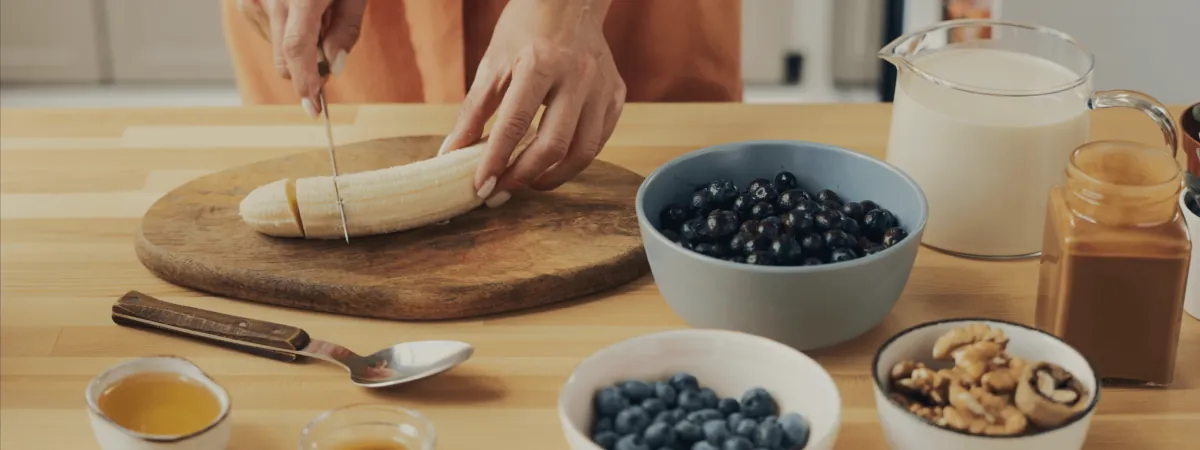
We’re tossing in whatever life hands us (relationships, careers, routines, breathwork apps) and trying to whip up the perfect banana smoothie that’ll finally taste like something we can be proud of.
But (bear with me), what if there is no perfect recipe or final smoothie? What if we’re all just a bunch of slightly confused, well-meaning mammals giving it a red-hot go?
Some of us throw in yoga. Others blend in philosophy, or sprinkle in therapy, hustle, meditation, parenting, the gym, activism, or work. We’re all searching for that one magical flavour combo that finally answers the age-old question: what’s the point?
Perhaps the answer isn’t in the ingredients, or even in the smoothie. Perhaps the whole point is that we are here, and as our blenders whir, we’re learning, messing up, laughing, sitting on buses, or noticing how the wind hits the trees in a certain way that makes something in us go still.
Perhaps, as philosopher Alan Watts once suggested, life is not a problem to be solved, but rather, an experience to be had.
The Human Need for Meaning (and control)
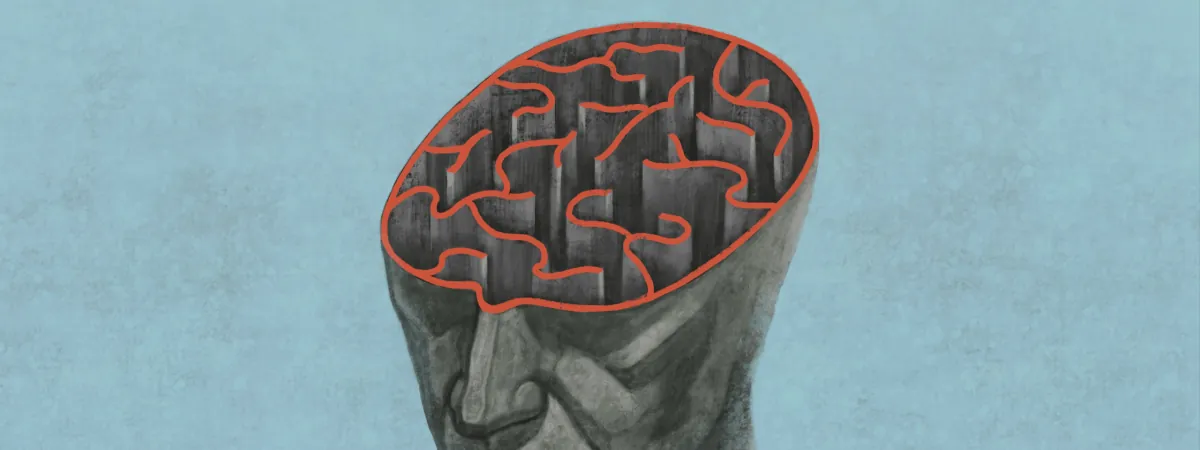
Humans are wired to seek meaning. From an evolutionary standpoint, our ability to detect patterns and turn chaos into order, helped us survive. We told stories, created beliefs, and constructed narratives that aimed to make sense of unpredictable realities.
Studies in cognitive psychology show that the brain prefers certainty: it wants closure and clarity. According to psychologist Arie Kruglanski’s ‘Need for Closure’ theory, when we’re faced with ambiguity, we tend to rush toward clear conclusions, even if they’re oversimplified or incorrect. The more uncertain we feel, the more urgently we want answers.
This desire for meaning is often linked to our need for control, and to a concerning degree, this can run our lives. A 2008 study published by Science found that when people feel a lack of control, they are significantly more likely to perceive patterns or assign meaning to unrelated events, essentially seeing “signals in the noise.” In other words, the more powerless we feel, the more desperate we become to find the master plan.
But there’s a point where that seeking turns into stress.
A 2020 study in The Journal of Positive Psychology revealed that people with a strong need for meaning but who hadn’t yet “found” it, experienced significantly more distress, anxiety, and depression than those who either had a clear sense of meaning, or were more open-ended in their approach.

Embracing Uncertainty
Perhaps what we need isn’t more control, but more curiosity, wonder, and space to say: I have no clue what this all means… and that’s okay.
Eckhart Tolle once said, “When you become comfortable with uncertainty, infinite possibilities open up in your life.”
In other words, instead of trying to fix the mess, it can be about sitting with it. Breathing into it. Letting the questions stay open.
In one study, psychologist Todd Kashdan found that people who cultivated “intolerance of uncertainty” tended to suffer higher levels of anxiety and emotional reactivity. Contrastingly, those who engaged with life’s open-endedness without needing immediate answers, reported higher well-being and adaptability.
Uncertainty, it turns out, isn’t a flaw in the system. It’s a feature, and a place where new perspectives and possibilities are born.
So, maybe we never really figure it out. Maybe there’s no TED Talk or ten-step plan that wraps life up in a neat little bow. Maybe the miracle is that we’re here, spinning, searching, evolving, trying. Waking up each day and choosing to go through it all again.
Maybe it’s not about perfecting the smoothie, but rather about noticing the blend of it all: the sweetness and the bitterness, the confusion and the clarity, the mess and the magic.
I’ll leave you with this. Maybe the mystery is the meaning, as well as the sacred ridiculousness of being here at all.